How Do I Sell Appliances for Scrap in Johns Creek?
Scrapping an old washer or fridge can put a little cash back in your pocket, but a few rules and some heavy lifting stand between the appliance and the scale.
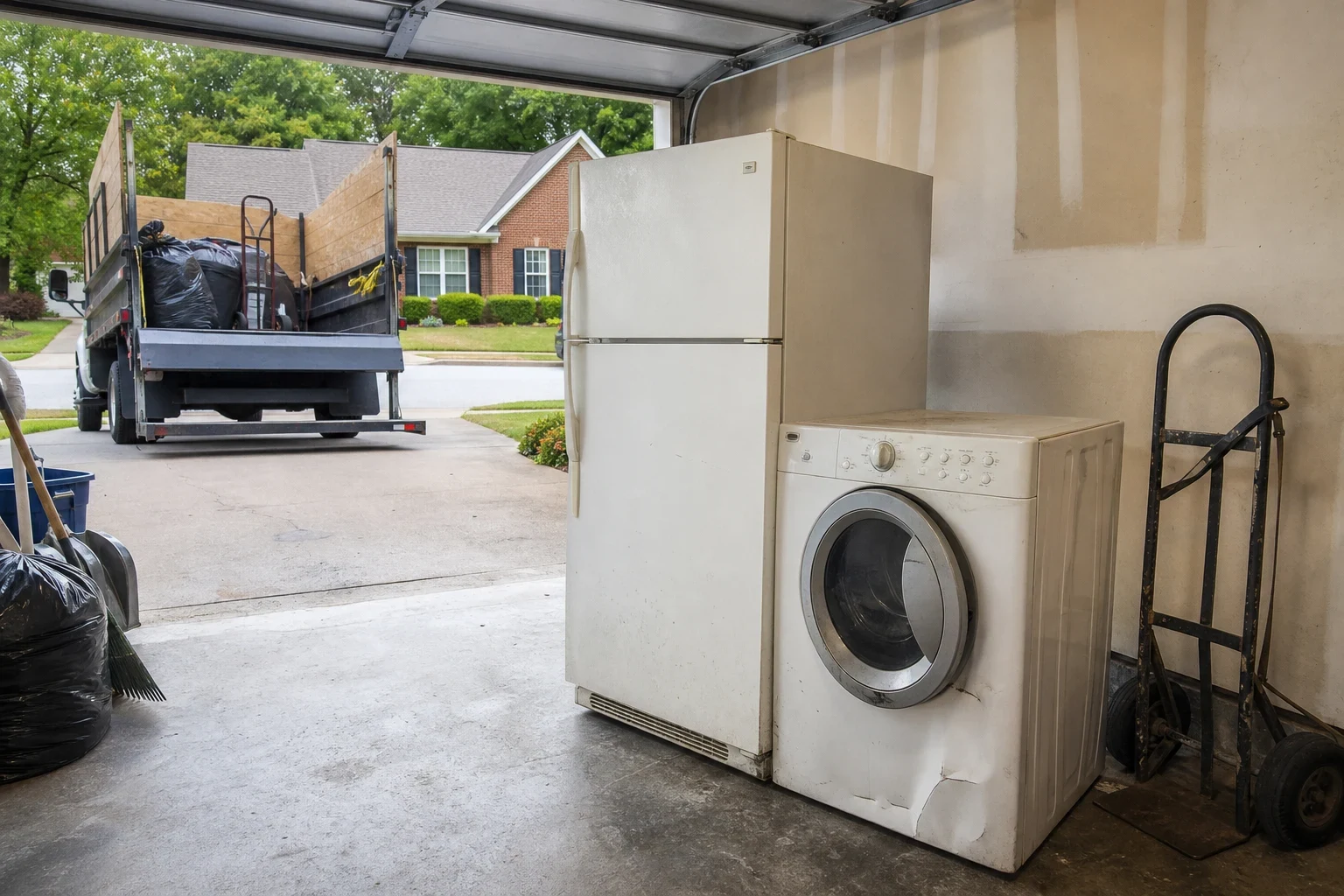
How to sell appliances for scrap?
To sell appliances for scrap, call a nearby scrap yard to confirm what they take, have any refrigerant recovered by a qualified technician with proper recovery equipment, remove copper and compressors if you want a better return, then haul everything in and get paid by weight. Expect to show photo ID when you sell.
Should you scrap it, sell it or repair it?
Before an appliance goes to the scale, it is worth asking whether it still has a working life. Scrap yards pay for metal by the pound, and the metal in a typical washer, range or dryer is mostly light-gauge steel. A machine that runs, or one that needs a simple fix, is usually worth more to a neighbor than to a recycler.
We lean toward repair when it makes sense. A dryer that stopped tumbling often just needs a belt or idler pulley. A washer that will not drain may have a clogged pump filter. Those are inexpensive parts and an afternoon of work.
Replacement makes more sense when the compressor on a refrigerator has failed, when a tub or drum is cracked or rusted through, or when the unit is old enough that parts are hard to find. At that point, scrap or responsible disposal is the honest answer.
- Working and clean: list it for sale or donate it
- Small, cheap fault: price the part before you give up on it
- Failed compressor, cracked tub, heavy rust: scrap or haul away
What scrap yards want from you before they pay
Call the yard first. Ask whether they take whole appliances, what they classify them as, and whether they need anything removed before you arrive. Some yards accept appliances as mixed steel, while others want them stripped down.
Georgia requires scrap metal buyers to record who is selling to them. Bring a valid photo ID and expect the yard to note your vehicle information and keep a record of the sale. Payment terms vary by yard, so ask how they pay when you call.
- A valid photo ID
- Your vehicle and tag information
- Proof of refrigerant recovery for cooling appliances, if the yard asks
- Appliances emptied of food, water, racks and loose glass
The refrigerant rule for fridges, freezers and AC units
Refrigerators, freezers, window air conditioners, dehumidifiers and wine coolers hold refrigerant in a sealed system. Federal rules prohibit venting it, so it must be recovered with proper equipment before the appliance is scrapped. Many yards will refuse a cooling appliance unless the refrigerant has been removed and documented, or they will charge to handle it themselves.
Please do not cut the lines yourself. Beyond the rules, the oil and refrigerant can spray, and a fridge tipped the wrong way in a garage is a heavy thing to wrestle. An HVAC or appliance technician with the right recovery equipment can remove the refrigerant and give you a written record of it, which is what the yard will want to see.
How to get a little more for your scrap
Whole appliances are paid at a low steel rate. The better-paying metals sit inside them, and pulling those out separately raises the return, if you have the tools and the patience.
Unplug and disconnect everything first. Water lines, gas connections on ranges and dryers, and dryer vents should be shut off and capped properly. If you are unsure about a gas line, have it capped by someone qualified before you move the appliance.
- Compressors from refrigerators and freezers, once the refrigerant is recovered
- Copper wire from power cords and wiring harnesses
- Motors from washers and dryers
- Aluminum or copper tubing from condenser coils
When hauling it yourself stops making sense
A full-size refrigerator can weigh well over two hundred pounds, and getting one up basement stairs or through a tight laundry room door is where floors, walls and backs get hurt. Add a truck or trailer, ratchet straps, a second person and the drive to the yard, and the payout for a single appliance can be thin.
If the goal is simply to clear the space, our appliance removal service takes care of the lifting and the trip. If you are clearing more than one item, a garage cleanout or basement cleanout can handle the old freezer along with everything stacked around it.
More questions about scrapping appliances
- Can I leave an old appliance at the curb in Johns Creek?
- Curbside pickup of large appliances depends on your hauler and its rules, and many do not take them with regular trash. Check with your service before setting anything out, since a fridge left outside can also be a hazard to children.
- Should I remove the refrigerator door before storing it outside?
- Yes. If a fridge or freezer will sit in a garage, driveway or yard before pickup, take the door off or secure it shut so no one can climb inside.
- Do scrap yards take microwaves and small appliances?
- Many do, often as mixed metal or electronics, but some will not take items with circuit boards or glass. Call the yard first and ask how they classify the item.
- Can you take appliances that are still working?
- Yes. We can remove a working appliance just as we would a broken one, and we handle the lifting and the haul away.
Rather skip the scrap yard trip?
Tell us what appliances you have and where they sit in your home, and we will give you a clear, upfront price over the phone or set up a free on-site estimate. We handle the lifting, the loading and the haul away.